
Hay Fever Season in the UK: Your Pollen Calendar Guide
When does hay fever season start and end in the UK? Our pollen calendar explains tree, grass and weed pollen months and how to prepare early.
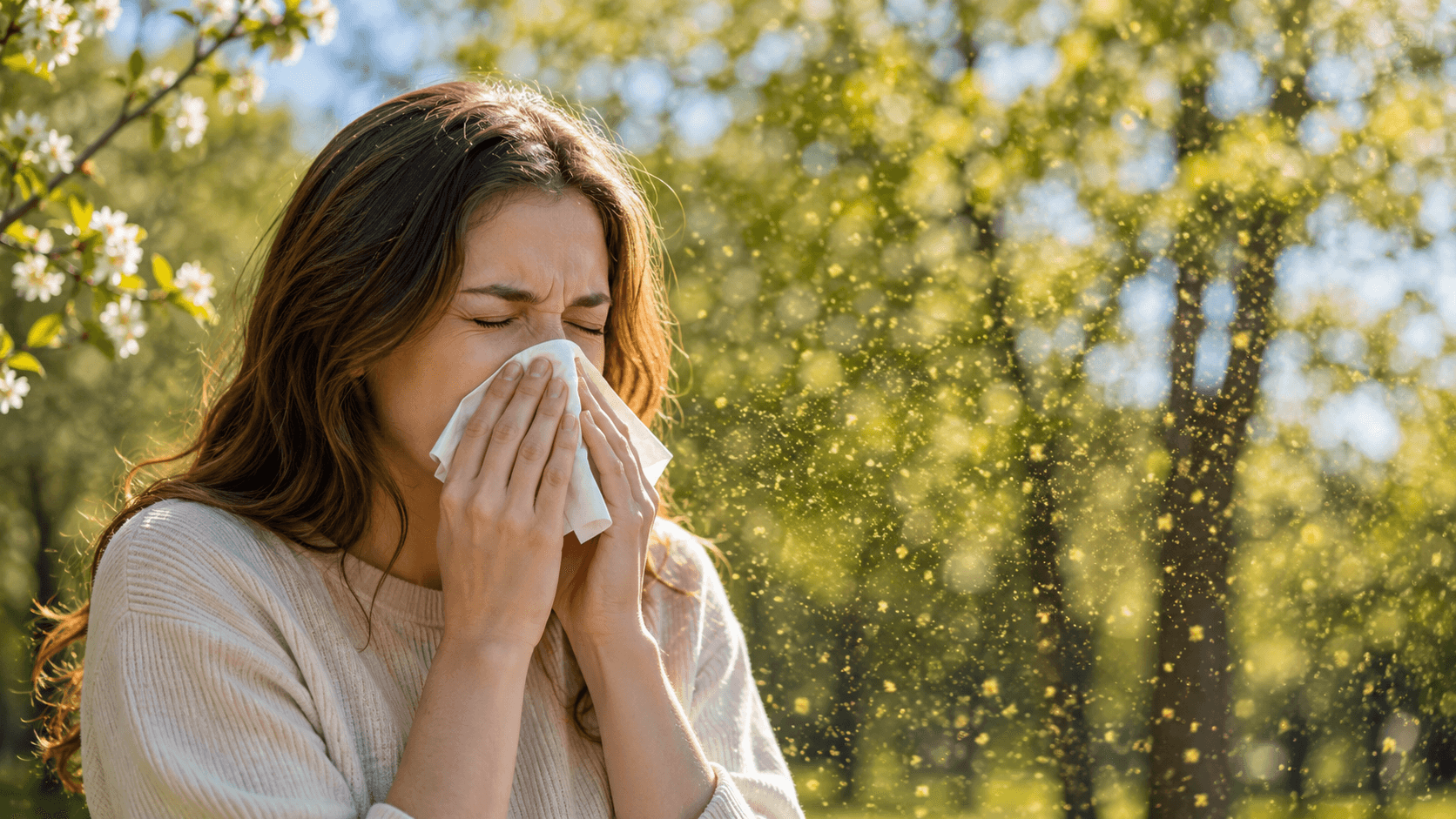
If your eyes start itching and the sneezes arrive like clockwork every spring or summer, you already know your body keeps a calendar of its own. Knowing when hay fever season runs in the UK - and which pollen sets your symptoms off - is the single most useful thing you can do to stay ahead of it.
This guide walks through the UK pollen calendar month by month, explains when hay fever season starts, peaks and ends, and shows how a little forward planning can make the season far more comfortable.
Hay fever (allergic rhinitis) affects around one in five people in the UK, according to the NHS. The good news: the season is fairly predictable, so you can prepare rather than simply react [3,4].
What is hay fever?
Hay fever, known medically as allergic rhinitis, is an allergic reaction to pollen from grass, trees, or weeds. It happens when your immune system mistakes these harmless particles for a threat and releases histamine to fight them off. This is what triggers the familiar symptoms of sneezing, a runny or blocked nose, and itchy, watering eyes [3].
Symptoms usually appear when the pollen count is high, typically from late March to September, and tend to be worse on warm, humid, and windy days. Some people react to tree pollen earlier in the year, while others are more affected by grass or weed pollen later in the summer [1].
Unlike a cold, hay fever isn't caused by a virus and can't be passed on to others. It can last for weeks or months, and while there's no cure, the symptoms can usually be managed effectively with antihistamines, steroid nasal sprays, and simple steps to reduce your exposure to pollen [3].
When is hay fever season in the UK?
Typically, the UK hay fever season runs from late March to September. Rather than one long stretch, it comes in three overlapping waves - tree pollen first, then grass, then weed. Each wave affects different people, which is why one person struggles in April while their neighbour sails through until June [1].
Grass pollen is the one to watch for most sufferers. It usually runs from mid-May to July and is the trigger for the majority of people with hay fever, per the Met Office. Timings also shift with geography and weather: seasons tend to start later and run shorter in the north of the UK and at higher altitudes, and a warm, dry spring can bring everything forward [1].
The UK pollen calendar (tree, grass and weed)
The calendar below shows roughly when each pollen type is in the air across the UK. Use it to work out which months are likely to be your worst - then plan around them.
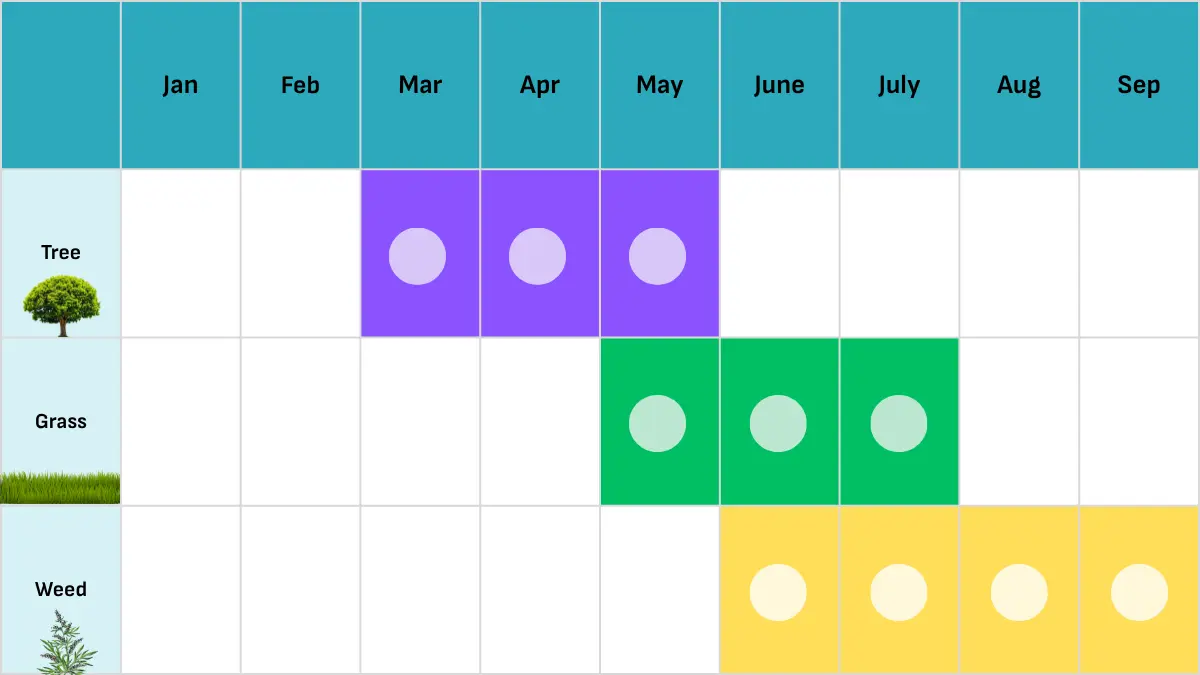
UK pollen calendar showing tree, grass and weed pollen seasons by month (Jan–Sep). Dates are typical and vary by region and weather. Source: Met Office [1].
Tree pollen season (late March to mid-May)
Tree pollen is the earliest trigger and affects around a quarter of people with hay fever. Birch is one of the most potent culprits in the UK, alongside oak, ash, hazel and plane. If your symptoms reliably appear in early spring - sometimes as early as late February in a mild year - tree pollen is the likely cause [1,2].
Grass pollen season (mid-May to July)
Grass is the big one. It affects the most sufferers and typically peaks in two waves - an early-June peak followed by a smaller one in early July. This is when hay fever tends to feel at its most relentless, particularly on warm, breezy days [1,2].
Weed pollen season (late June to September)
Weeds such as nettle, dock, mugwort and plantain carry the season into late summer and early autumn. If your symptoms linger well after the grass has faded, weed pollen may be your trigger [2].
When does hay fever season start - and can it start early?
For most people, symptoms begin in late March as tree pollen is released. But hay fever can start earlier. In a mild winter, hazel and alder pollen can appear in January or February, so it is entirely possible to get hay fever in February - it simply catches people out because they don't expect it yet [4].
Milder winters and warmer springs, linked to our changing climate, have nudged the start of the season earlier in recent years. If you notice symptoms sooner than usual, you are not imagining it [1].
When does hay fever season end?
Hay fever season generally winds down through September, once weed pollen fades and the weather cools. Damp, cooler autumn air brings pollen counts down quickly. A small number of people react to fungal spores, which can linger into October in warm, wet conditions - but for the great majority, September marks the end of it [4].
Signs of hay fever
Hay fever symptoms usually affect your nose, eyes, throat, and sinuses, and can range from mildly irritating to genuinely disruptive. They tend to flare when the pollen count is high and often ease on cooler, rainy days when there's less pollen in the air. The main signs to look out for are [3]:
- Frequent sneezing and a runny or blocked nose
- Itchy, red, or watering eyes
- An itchy throat, mouth, nose, or ears
- Loss of smell
- Pain or tenderness around your temples and forehead from blocked sinuses
- Headaches and earache
- Feeling tired, run down, or experiencing "brain fog"
If you have asthma, hay fever can also make your symptoms worse, causing a tight chest, wheezing, coughing, or breathlessness during high pollen periods [3].
If your symptoms last all year round rather than seasonally, it may point to a different allergy, such as dust mites or pet dander, and it's worth speaking to your pharmacist or GP [3,5].
Can hay fever make you cough?
Yes. Hay fever often causes a dry, tickly cough. It's usually down to postnasal drip - extra mucus from your nose running down and irritating your throat. Pollen can also inflame your airways, and it's a common asthma trigger, so it may bring on wheezing too. The cough normally comes with sneezing, a runny nose and itchy eyes, and is worse on high-pollen days.
Antihistamines, a steroid nasal spray and limiting pollen exposure usually help. Speak to your pharmacist or GP if the cough lingers, you're coughing up discoloured phlegm, or you feel short of breath [3].
Can hay fever cause a sore throat?
Yes. A scratchy, irritated throat is a common hay fever symptom. It's mainly caused by postnasal drip and by breathing through your mouth when your nose is blocked, which dries the throat out. It usually comes alongside sneezing, itchy eyes and a runny or blocked nose, and - unlike an infection - without a high temperature.
Staying hydrated, using a steroid nasal spray and taking antihistamines can ease it. Speak to your pharmacist or GP if it's severe, lasts more than a week, or comes with a fever or trouble swallowing [3].
How long does hay fever last?
There are two ways to think about this. On any given day, symptoms flare when pollen is in the air - often worst in the early morning and again in the early evening, when pollen rises and then settles. Across the year, how long your hay fever lasts depends on which pollen you react to: a few weeks for a single trigger, or several months for someone sensitive to tree, grass and weed pollen alike. Identifying your trigger from the calendar above is the key to knowing how long your personal season will run [1].
Why is hay fever worse in some years - and at certain times of day?
You may find yourself asking why your hay fever is so bad this year. Several factors combine: a warm, wet spring encourages plants to produce more pollen, while a sudden burst of hot, dry, breezy weather sends more of it into the air at once. Thunderstorms can briefly make things worse by bursting pollen grains into smaller, more irritating fragments [1].
Within the day, pollen is typically highest in the early morning and early evening. On high-pollen days it can help to keep windows closed at those times, dry washing indoors, and rinse pollen from your hair and face when you come inside [1].
Hay fever in babies and children
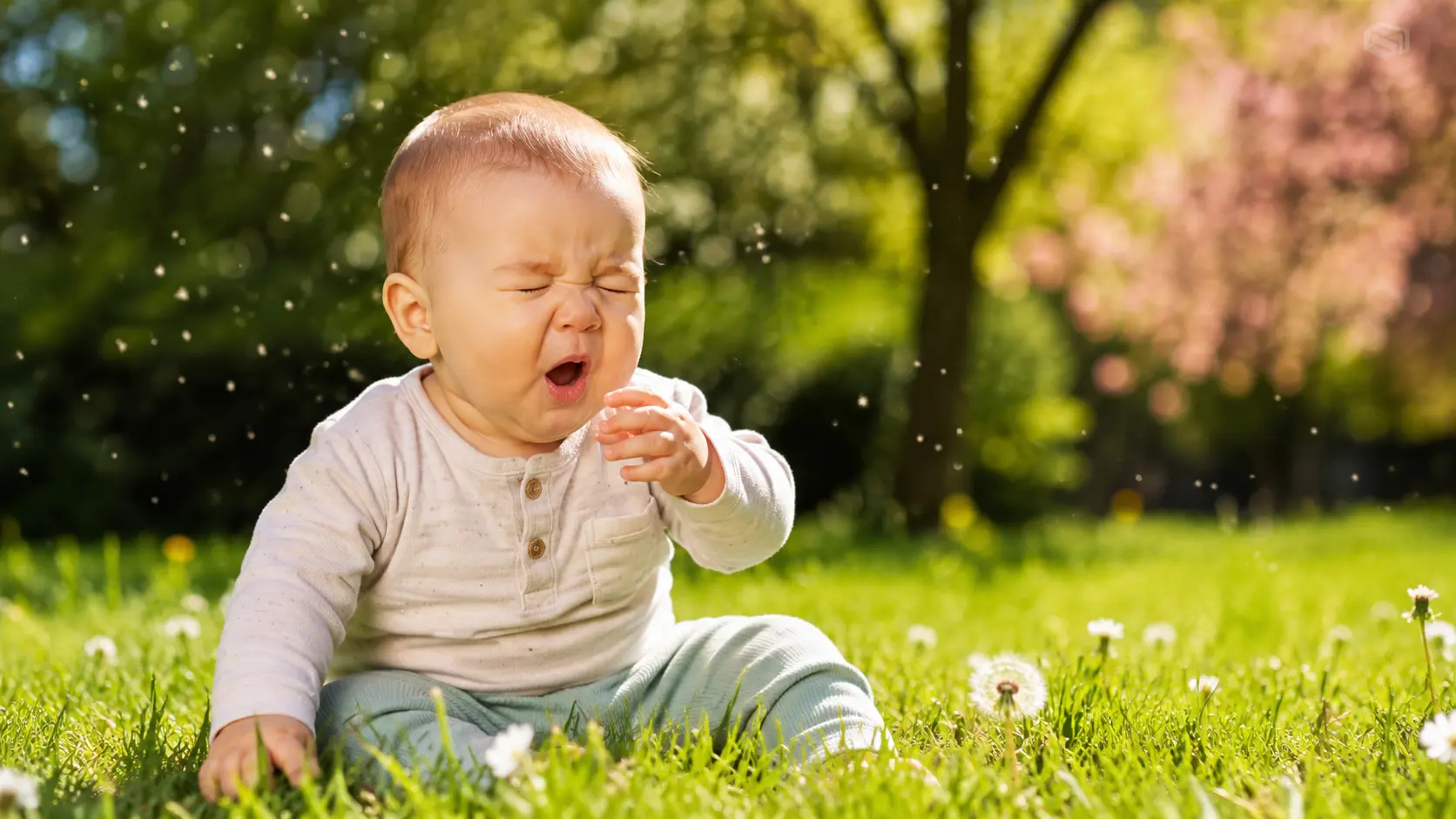
Hay fever can affect children too, though it's uncommon in babies and the under-3s. It usually appears in early childhood and becomes more common as children get older, often peaking in the teenage years. The symptoms are the same as in adults: sneezing, a runny or blocked nose, itchy watery eyes and sometimes a cough [4,5].
In young children it's easy to mistake hay fever for a cold. The clue is that hay fever tends to last for weeks, follows the seasons, flares up outdoors or on high-pollen days, and doesn't cause a high temperature. Left untreated it can disturb sleep and make it harder to concentrate at school [4].
Simple steps help a lot: keep windows shut when the pollen count is high, wipe pollen off your child's face and hands after they've been outside, dab a little barrier balm around the nostrils to trap pollen, and avoid drying washing outdoors. When it comes to medicines, always check the age suitability, as many antihistamines and nasal sprays have a minimum age.
Speak to your GP if your child's symptoms are severe, aren't easing with treatment, are affecting their sleep or school, if your child is under one or has asthma [5].
How to prepare for your hay fever season
The most effective habit is simple: get ahead of it. Many people find that starting their usual hay fever routine one to two weeks before their trigger pollen peaks works better than waiting for symptoms to take hold. Mark your likely weeks on the calendar above and prepare before they arrive [5].
Everyday steps help too - checking the daily pollen forecast, wearing wraparound sunglasses outdoors, applying a little balm around the nostrils to trap pollen, and showering after time outside.
For advice on which options might suit you, a pharmacist is a great first port of call: always read the patient information leaflet that comes with any medicine and speak to your pharmacist or GP if you are pregnant, breastfeeding, buying for a child, or taking other medication [3].
Get ahead of the season. Explore hay fever & allergy relief, or if over-the-counter options aren’t alleviating your symptoms, visit our hay fever & allergies online doctor service where a clinician can assess whether a prescription treatment is suitable for you.
References
- Met Office – When is hay fever season in the UK? (pollen calendar). https://weather.metoffice.gov.uk/warnings-and-advice/seasonal-advice/health-wellbeing/pollen/when-is-hayfever-season (accessed 14 July 2026).
- Met Office – Pollen: what are the different types? https://www.metoffice.gov.uk/blog/2025/what-are-the-different-types-of-pollen (accessed 14 July 2026).
- NHS – Hay fever. https://www.nhs.uk/conditions/hay-fever/ (accessed 14 July 2026).
- Allergy UK – Pollen allergy and hay fever (environmental allergies). https://www.allergyuk.org/support-for-you/living-with-an-allergy/environmental-allergies/ (accessed 14 July 2026).
- NICE CKS – Allergic rhinitis. https://cks.nice.org.uk/topics/allergic-rhinitis/ (accessed 14 July 2026).
Frequently Asked Questions
When does hay fever season start in the UK?
Usually in late March, when tree pollen is released, though it can begin in January or February in a mild winter. Grass pollen - the most common trigger - arrives from mid-May [1].
What months are worst for hay fever?
For most people, mid-May to July, when grass pollen peaks. Tree-pollen sufferers tend to struggle most in April and weed-pollen sufferers from late summer into September [1].
Can hay fever start in February?
Yes. In a mild winter, early tree pollens such as hazel and alder can appear in January or February, so early symptoms are possible before the main season begins [4].
How long does hay fever last?
It depends on your trigger. Reacting to one pollen type may mean a few weeks of symptoms; reacting to tree, grass and weed pollen can mean several months, from spring through to early autumn [1].
Which pollen am I allergic to?
Match your symptom months to the calendar above: spring points to tree pollen, early-to-mid summer to grass, and late summer to weeds. An allergy test via your GP can confirm your specific trigger [4,5].
Why is my hay fever so bad this year?
Weather is the main driver. A warm, wet spring followed by hot, dry, breezy days pushes pollen counts up, and thunderstorms can briefly intensify symptoms [1].
What time of day is pollen highest?
Typically, early morning and early evening, as pollen rises and later settles. Keeping windows closed at those times can help on high-pollen days [1].
When should I start taking hay fever treatment?
Many people find starting their usual routine one to two weeks before their trigger pollen peaks works best. Ask your pharmacist about options that suit you and always read the patient information leaflet [5].


You might also like

Migraine Tablets: Triggers and Treatments
A migraine is the name given to a type of headache. Migraines are very common amongst many adults - affecting 1 in every 5 women and around 1 in every 15 men.
Eczema and Psoriasis: The Ultimate Guide
Irritating skin conditions are some of the most common ailments for adults and children. Dry or itchy skin can become painful and hard to manage and in some cases can become infected, causing more issues.
The Complete Guide to Asthma Inhalers
Asthma is one of the most commonly suffered health conditions in the UK, with around 5.4 million people receiving inhaler treatments to relieve Asthma symptoms.