
Nausea
Nausea is characterised by an uncomfortable, queasy feeling in your stomach making you feel like you could be sick. Most people will experience feeling nauseous from time to time and the feeling usually goes away naturally [1].
It can be caused by a number of different things, for example, a stomach bug or a migraine, some people experience nausea when travelling or when they are anxious. Certain...

Description
Nausea is characterised by an uncomfortable, queasy feeling in your stomach making you feel like you could be sick. Most people will experience feeling nauseous from time to time and the feeling usually goes away naturally [1].
It can be caused by a number of different things, for example, a stomach bug or a migraine, some people experience nausea when travelling or when they are anxious. Certain medications can also make you feel nauseous and of course, many expecting mothers experience nausea and sickness during pregnancy [1].
Anti-sickness tablets (antiemetics), also known as anti-nausea medication or nausea tablets, are designed to calm your stomach, ease nausea and in turn reduce the urge to vomit [2]. Our UK GPhC-registered pharmacists can review your symptoms during the online consultation and where appropriate, arrange treatment for you with fast, discreet delivery to your door.
Feeling sick can be more than just unpleasant. When it lingers or keeps returning, it can take a real toll on everyday life, making it harder to eat, work, sleep and get on with the things you would normally do.
Treatments
What is nausea?
Nausea refers to that unpleasant feeling when you are about to vomit. It is usually felt at the back of your throat or upper stomach and often comes alongside extra saliva, retching, dizziness, sweating or just a general feeling of being unwell [1].
Nausea is not a condition but a symptom, meaning it is your body’s response to something else going on. Oftentimes, movement, strong smells, an empty stomach or overeating can worsen nausea symptoms [1]. Understanding what is triggering your nausea is the first step in treating it effectively.
Getting the right anti-sickness medication for you depends on a few different yet equally important factors, including what is causing your symptoms, your medical history and any other medicines you are currently taking [2,19].
Certain anti-sickness medications, such as travel sickness tablets, can be bought from a pharmacy over the counter [3], while others, including cyclizine tablets and prochlorperazine are prescription-only medicines that a prescriber must assess you for first [6,7].
Over-the-counter vs prescription anti-nausea medication
A common question is whether you can buy anti-sickness tablets over the counter. The answer depends on the medicine. Some are available to buy from a pharmacy or supermarket, while others require a prescription because a prescriber has to check they are safe and suitable for you [3].
Over the counter anti-sickness tablets (OTC)
Anti-sickness tablets available without prescription are mainly aimed at travel and motion sickness. Hyoscine hydrobromide can be bought from general sale (GSL) retailers (including supermarkets) as well as pharmacies [3], while cinnarizine and promethazine teoclate are pharmacy-only (P) medicines sold under a pharmacist's supervision [4].
General sale (GSL) - genuinely "over the counter", can be sold off the shelf in supermarkets and general shops as well as pharmacies, for example:
- Anti-sickness wristbands – these are the only general sale anti-sickness products. They use acupressure rather than medicine, so they can be sold anywhere.
Pharmacy (P) medicines only - sold only in a pharmacy, under the pharmacist's supervision (not off the shelf) [4] for example:
- Hyoscine hydrobromide 0.15mg & 0.3mg (Kwells & Joy-Rides)
- Cinnarizine (Stugeron 15mg)
- Promethazine teoclate (Avomine)
A pharmacy medicine called Buccastem M (prochlorperazine) can also be sold, without a prescription, to adults who have previously been diagnosed with sickness caused by migraine [5]. A pharmacist will give you balanced advice on how to take these, who should avoid them and the possible side effects.
Prescription anti-sickness tablets (POM)
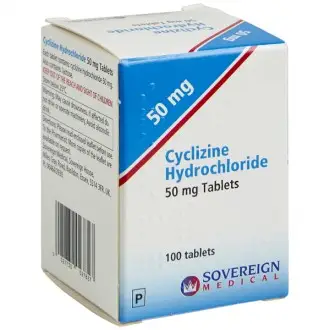
Other anti-nausea tablets, including cyclizine tablets and prochlorperazine tablets, are prescription-only medicines (POM) [6,7].
This means a prescriber needs to assess your symptoms, medical history and other medicines before deciding whether treatment is right for you. Our online consultation is designed to make that assessment quick and straightforward, and the prescriber, not you, decides on the suitability of the medication.
If you feel like anti-sickness tablets are something you need, start a quick online consultation and our clinical team will recommend the most suitable option for you.
Anti-sickness tablets explained
Anti-sickness tablets, sometimes referred to as antiemetics, are medicines that help to reduce feelings of nausea and to stop you from vomiting [2].
Anti-nausea medication works in different ways depending on the class, for example the tablet which alleviates travel sickness wouldn’t be the same tablet given for nausea experienced as a result of a migraine or a stomach bug [2,19].
Grouping these medicines by class helps explain how a prescriber decides which one to use, because the choice depends on what is causing the nausea [19].
Antihistamines (e.g. cyclizine, cinnarizine, promethazine)
- Commonly used for motion sickness, vertigo and inner ear conditions that contribute to nausea
- Some available over the counter, some prescription only
- Can cause drowsiness
Phenothiazines (e.g. prochlorperazine)
- Used for nausea linked to migraine, vertigo and some inner-ear conditions
- Mainly prescription only, though buccal tablets (Buccastem M) are available over the counter for nausea and dizziness linked to previously diagnosed migraine in adults
- Can cause drowsiness
Dopamine antagonists (e.g. metoclopramide, domperidone)
- Used for nausea related to migraine or slow stomach emptying
- Prescription only
- Can cause drowsiness or restlessness
- Metoclopramide is usually limited to short courses (around 5 days) because of the risk of movement-related side effects
- Domperidone is used at the lowest effective dose for the shortest time because of a small risk of serious heart-related side effects [20]
5-HT3 blockers (e.g. ondansetron)
- Used for nausea caused by chemotherapy, surgery or other specific situations
- Prescription only
- Can cause constipation and headaches
Hyoscine hydrobromide (an anticholinergic)
- Used to prevent motion sickness symptoms such as nausea, vomiting and vertigo
- Available over the counter
- Can cause drowsiness, dry mouth and blurred vision
Safety profile
Anti-sickness tablets side effects
Like with all medicines, anti-sickness tablets can cause side effects. Not everyone who uses them will experience side effects, most are mild and will ease off as your body gets used to the medicine. Exact effects vary depending on the specific type of tablet you are taking due to the differences in how they work [2].
These types of tablets can often make people feel sleepy or experience slowed reactions, therefore you should take extra care when driving or operating machinery until you understand how the medicine affects you. It is also sensible to avoid alcohol while taking them as this can add to drowsiness [3,6].
Common side effects can include:
- Drowsiness or feeling sleepy
- Dry mouth
- Blurred vision
- Constipation
- Dizziness or headache
Rarer side effects can include:
- A fast or irregular heartbeat
- Restlessness or agitation
- Difficulty passing urine
- Uncontrolled muscle movements
- An allergic reaction, such as a rash, swelling of the face, lips or throat, or difficulty breathing
How do anti-sickness tablets work?
These signals come from different pathways depending on what is causing the nausea, that’s why a pharmacist or prescriber will ask about your symptoms before recommending a specific class of anti-sickness tablet; they work when they are matched correctly to the problem [2,19].
They target the vomit reflex
Anti-sickness tablets work by blocking signals in the brain and gut that set off the vomiting reflex. The brain receives alerts from many different sources in your body including from your gut, the balance system in your inner ear and the area of your brain called the chemoreceptor trigger zone [2].
Anti-nausea medication and anti-sickness tablets (antiemetics) work by interrupting these signals and alerts before they turn into nausea and vomiting [2].
They block chemical messengers which cause nausea and vomiting
This medication works by blocking specific chemical messengers that trigger nausea. These “be sick” signals travel using chemical such as histamine, dopamine, serotonin and acetylcholine, each fitting into its own receptor like a key in a lock [2].
Anti-sickness tablets sit in those locks so the "be sick" message cannot get through to the “vomiting centre” (vomiting reflex) which is controlled by the brain. With the message blocked prior to its arrival, the reflex is not triggered and you are less likely to feel sick or be sick.
Different causes use different chemical pathways
As mentioned above, different causes take different pathways when triggering nausea and vomiting - no single tablet blocks every pathway [2]:
- Histamine and acetylcholine: the chemical pathways behind motion sickness and inner-ear problems.
- Dopamine: the chemical pathway behind nausea from migraine or slow stomach emptying.
- Serotonin: the main chemical pathway behind sickness from chemotherapy or surgery.
The tablet must be matched to the cause
No single tablet blocks every pathway, anti-nausea medication that works effectively for travel sickness is unlikely to effectively treat chemotherapy-related sickness because they act on different signals [2]. Choosing the right class of medication is what makes the treatment effective.
Therefore, it is imperative that you tell the pharmacist or prescriber what is triggering your symptoms, how long you have been experiencing symptoms, any medical conditions you have and any medication that you take. This information is crucial for matching your symptoms to the class most likely to help alleviate your nausea [19].
How long do anti-sickness tablets take to work
The type and form of anti-sickness tablet you take will dictate how long the medicine takes to work. Tablets typically tend to start working within 30 to 60 minutes [2,3], while other anti-nausea medications are taken in advance, for example travel sickness tablets to prevent sickness beforehand. Always follow the instructions in the patient leaflet and the advice from your prescriber or pharmacist.
Symptoms
While the standard symptoms of nausea are feeling sick or having the urge to vomit, there are other associated side effects that you might experience. They include:
- Feeling lethargic
- Dry heaving
- Shaking
- A general feeling of unease or queasiness in the stomach
- Retching or vomiting
- Being pale and clammy
- Sweating
- Changes in your sense of smell
- Being unable to move without feeling the nausea worse
For some, symptoms pass quickly, within minutes; for others it can linger much longer or as a constant nausea that makes everyday life more difficult.
References
- NHS. Feeling sick (nausea) [Internet]. London: National Health Service; [cited 2026 Aug 19]. Available from: https://www.nhs.uk/symptoms/feeling-sick-nausea/
- Patient / EMIS. Medicines for nausea (antiemetics) [Internet]. Leeds: Patient; [cited 2026 Aug 19]. Available from: https://patient.info/digestive-health/nausea-and-vomiting/medicines-for-nausea
- NHS. Hyoscine hydrobromide: medicine for travel sickness [Internet]. London: National Health Service; [cited 2026 Aug 19]. Available from: https://www.nhs.uk/medicines/hyoscine-hydrobromide/
- Electronic Medicines Compendium (emc). Stugeron 15mg Tablets (cinnarizine): Summary of Product Characteristics [Internet]. [cited 2026 Aug 19]. Available from: https://www.medicines.org.uk/emc/product/371/smpc
- Electronic Medicines Compendium (emc). Buccastem M Buccal Tablets (prochlorperazine maleate): Summary of Product Characteristics [Internet]. [cited 2026 Aug 19]. Available from: https://www.medicines.org.uk/emc/product/478/smpc
- NHS. Cyclizine: an anti-sickness medicine [Internet]. London: National Health Service; [cited 2026 Aug 19]. Available from: https://www.nhs.uk/medicines/cyclizine/
- NHS. Prochlorperazine [Internet]. London: National Health Service; [cited 2026 Aug 19]. Available from: https://www.nhs.uk/medicines/prochlorperazine/
- NHS. Gastroparesis [Internet]. London: National Health Service; [cited 2026 Aug 19]. Available from: https://www.nhs.uk/conditions/gastroparesis/
- NHS. Migraine [Internet]. London: National Health Service; [cited 2026 Aug 19]. Available from: https://www.nhs.uk/conditions/migraine/
- NHS. Labyrinthitis and vestibular neuritis [Internet]. London: National Health Service; [cited 2026 Aug 19]. Available from: https://www.nhs.uk/conditions/labyrinthitis/
- NHS. Get help with anxiety, fear or panic [Internet]. London: National Health Service; [cited 2026 Aug 19]. Available from: https://www.nhs.uk/mental-health/feelings-symptoms-behaviours/feelings-and-symptoms/anxiety-fear-panic/
- NHS. Symptoms of irritable bowel syndrome (IBS) [Internet]. London: National Health Service; [cited 2026 Aug 19]. Available from: https://www.nhs.uk/conditions/irritable-bowel-syndrome-ibs/symptoms/
- NHS. Norovirus (vomiting bug) [Internet]. London: National Health Service; [cited 2026 Aug 19]. Available from: https://www.nhs.uk/conditions/norovirus/
- NHS. Metoclopramide [Internet]. London: National Health Service; [cited 2026 Aug 19]. Available from: https://www.nhs.uk/medicines/metoclopramide/
- NHS. Vomiting and morning sickness [Internet]. London: National Health Service; [cited 2026 Aug 19]. Available from: https://www.nhs.uk/pregnancy/common-symptoms/vomiting-and-morning-sickness/
- NHS. Severe vomiting in pregnancy (hyperemesis gravidarum) [Internet]. London: National Health Service; [cited 2026 Aug 19]. Available from: https://www.nhs.uk/pregnancy/complications/severe-vomiting/
- National Institute for Health and Care Excellence (NICE). Nausea/vomiting in pregnancy. Clinical Knowledge Summaries [Internet]. [cited 2026 Aug 19]. Available from: https://cks.nice.org.uk/topics/nausea-vomiting-in-pregnancy/
- NHS. Tirzepatide (Mounjaro) [Internet]. London: National Health Service; [cited 2026 Aug 19]. Available from: https://www.nhs.uk/medicines/tirzepatide/
- Joint Formulary Committee. Nausea and labyrinth disorders. British National Formulary [Internet]. London: NICE and Royal Pharmaceutical Society; [cited 2026 Aug 19]. Available from: https://bnf.nice.org.uk/treatment-summaries/nausea-and-labyrinth-disorders/
- NHS. Domperidone [Internet]. London: National Health Service; [cited 2026 Aug 19]. Available from: https://www.nhs.uk/medicines/domperidone/
- NHS. PMS (premenstrual syndrome) [Internet]. London: National Health Service; [cited 2026 Aug 19]. Available from: https://www.nhs.uk/conditions/pre-menstrual-syndrome/
Frequently Asked Questions
Can you buy anti-sickness tablets over the counter?
Yes, some anti-sickness tablets are available over the counter, but not off the shelf. Travel and motion sickness tablets containing hyoscine hydrobromide or cinnarizine are pharmacy (P) medicines, which means you can buy them without a prescription, but only from a pharmacy and under the supervision of a pharmacist [3]. Buccastem M is another option: it can be sold by a pharmacy to adults who have already been diagnosed with migraine and experience sickness as part of it [5].
If you would prefer a medicine-free option, anti-sickness wristbands are the only anti-sickness products sold on general sale, so you can pick these up from supermarkets and general shops as well as pharmacies.
What do anti-sickness tablets do?
This type of medicine is used to prevent or alleviate feelings of nausea and stop you from vomiting [2]. They can help with nausea and sickness caused by a range of different things such as:
- Travel or motion sickness
- Migraine sickness or nausea
- Pregnancy nausea (morning sickness)
- Vertigo
- The after-effects of surgery
How long does anti-sickness take to work?
Most tablets start to work within 30 to 60 minutes, though some are taken in advance to prevent sickness [2]. Follow the leaflet or your prescriber's instructions for timing and dosage.
Can you take anti-sickness tablets when pregnant?
There are specific anti-sickness tablets that can be used during pregnancy, but only under medical advice. If you are pregnant and experiencing severe or persistent nausea, please speak to your GP or midwife before buying or taking any medication by yourself [17].
What are the side effects of anti-sickness tablets?
Common side effects of this type of medication include drowsiness, dry mouth, blurred vision and constipation but not everyone experiences them [3,6]. Your pharmacist can explain any side effects of the specific medicine you have been prescribed.
What is the best anti-sickness tablet?
There isn’t a best anti-sickness tablet for everyone because they all work so differently; the most suitable medicine depends on what is causing your nausea, your medical history and any other medications you are currently taking [19].
How many anti-sickness tablets can I take?
How many anti-sickness tablets you can take also depends on the medication prescribed because they all have different dosages and some shouldn’t be doubled up. This also means that the dose levels could be lower if you have certain conditions or take other medicines. The reliable number is the one printed on your specific packet or patient information leaflet, under "How much to take” [2].

