
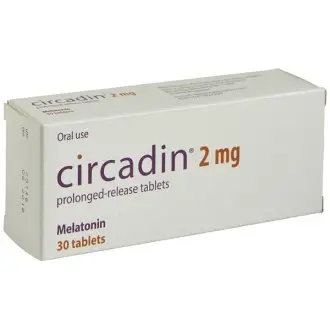
Images for illustrative purposes only
Looking for Next Day delivery?
Order before 15:30 on Monday to Friday for next day delivery
Circadin (Melatonin)
Circadin is a medicine licensed for the short-term treatment of primary insomnia (persistent difficulty getting to sleep or staying asleep, or poor quality sleep) in adults aged 55 and over. It is sometimes prescribed off-label (outside its licence) to treat jetlag. It contains the active ingredient melatonin, which is also found naturally in the body. It works by increasing the levels of melatonin in the body at night, which aids sleep. The body produces more melatonin at night, which produces a regular night cycle. Light prevents the production of melatonin, which means we are more alert during the day.
- Sometimes prescribed off-label for jet lag
- Increases melatonin in the body to aid sleep
- No longer available - licensed version available here
Circadin is a brand name of Melatonin. It is a modified-release preparation of Melatonin, a chemical produced in the brain that sends signals to the rest of the body to prepare for sleep.
Circadin contains lactose monohydrate. If you have been told by your doctor that you have an intolerance to some sugars, contact your doctor before taking this medicine.
Tell your doctor or pharmacist if you take any other medicines, especially fluvoxamine, cimetidine, quinolone antibiotics, rifampicin, oestrogens (in contraceptives or HRT), carbamazepine, or other sleeping medicines such as benzodiazepines, zaleplon, zolpidem or zopiclone. Do not drink alcohol before, during or after taking Circadin, as it reduces how well Circadin works.
There is always a risk of side effects with all medications. Some of these can be quite mild and can subside over time. Others are more serious and should be reported to your GP right away if you experience any side effects. Please contact a member of our team if you are concerned about any potential side effects that may occur when taking Circadin.
Uncommon side effects (may affect up to 1 in 100 people) include:
- Night sweats
- Chest pain
- Headaches
- Anxiety
- Nausea
- Weight increase
Rare side effects (may affect up to 1 in 1,000 people) include:
- Reduced number of white blood cells in the blood
- Pain
There are some rare but serious side effects that can occur when using Circadin. Speak to a healthcare professional as soon as possible if you experience any of the following:
- Dizziness
- Low mood
- Psoriasis
- Unexplained bruising
What’s the difference between Circadin tablets and Melatonin tablets you can buy in a health food shop?
Circadin tablets have a unique prolonged-release formulation that delivers the melatonin dose over 8-10 hours, which mimics the body’s natural release of melatonin. Ordinary melatonin bought in health food shops release melatonin in one burst, and so overload the body.
Can you take alcohol and Circadin together?
It is advised to avoid using alcohol when taking Circadin. Alcohol disrupts your regular sleeping pattern and will counteract the aim of the Circadin to establish a new sleeping pattern in your destination.
What to do if you miss a dose of Circadin?
Take it as soon as you remember. It is not advisable to double the dose or take more than one tablet per day.
How often can you use Circadin?
Circadin can be taken when you need it and is not habit-forming. You need to take it continuously for it to have an effect.
For how long should I take Circadin?
The licensed dose is one 2mg tablet a day, taken after food, 1-2 hours before bedtime, for up to 13 weeks. Using Circadin for jet lag is off-label (outside its licence), so if it has been prescribed for jet lag, take it exactly as your prescriber directs. You can stop using Circadin at any time.
Warnings
This medicine may make you feel drowsy. Do not operate heavy machinery or drive
Leaflets
Before taking any medicines, regardless of whether they are over the counter or prescription-only, it is essential always to read the patient information leaflet.

