
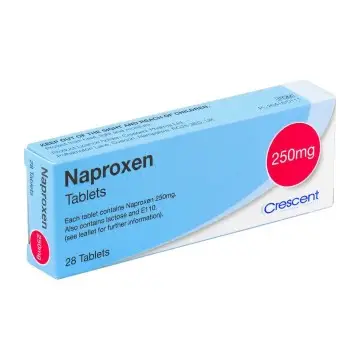
Images for illustrative purposes only
Looking for Next Day delivery?
Order before 15:30 on Monday to Friday for next day delivery
Naproxen
Naproxen is a strong anti-inflammatory medication used to treat pain and reduce swelling in joints and muscles. Naproxen is commonly used to treat symptoms of arthritis. It is an example of a non-steroidal anti-inflammatory drug (NSAID). It works by preventing the release of inflammatory substances in the body that can lead to pain and swelling. Naproxen is prescribed in 500 mg and 250 mg doses.
- Non Steroidal Anti Inflammatory Drug (NSAID)
- Relieves pain and reduces swelling and inflammation
Buy Naproxen Tablets Online
Naproxen is a prescription-only medicine that belongs to the same group of pain relief drugs as ibuprofen – non-steroidal anti-inflammatory drugs. This type of pain relief drug is better at reducing pain than over-the-counter medications and has proven to be effective in managing pain and inflammation.
This makes Naproxen an effective pain relief for a variety of pain symptoms. Most commonly, Naproxen is used to treat rheumatoid arthritis, osteoarthritis, and gout. However, Naproxen tablets are also suitable for relieving period pains, muscle disorders, and back pain. You can buy Naproxen online from Pharmacy Online following a short consultation with a member of our pharmacy team.
When to Use Naproxen Tablets?
Naproxen tablets are painkillers that can reduce inflammation and pain. They're generally prescribed when traditional anti-inflammatory drugs aren't enough to reduce your symptoms.
Your doctor or a registered pharmacist may prescribe Naproxen in the following situations:
- Arthritis: Rheumatoid Arthritis and Osteoarthritis can cause long-term pain and discomfort, but as an anti-inflammatory medication, Naproxen can reduce your symptoms.
- Musculoskeletal Conditions: Many people with conditions such as gout, chronic back pain, tendinitis, and bursitis find that Naproxen provides relief when other anti-inflammatory medicines don't.
- Acute Pain: Naproxen can also be beneficial for severe menstrual pain (dysmenorrhea).
Naproxen Tablets Age Restrictions
Naproxen tablets are for adults. They are not recommended for children under 16, except to treat juvenile rheumatoid arthritis in children over 5, when a specialist doctor may prescribe them.
How to Use Naproxen?
While Naproxen is an effective anti-inflammatory medication, it does come with some risks. When using the medication, please follow these instructions:
- Always use the lowest possible strength. Naproxen is available in 250mg and 500mg doses. Your pharmacist or doctor will advise which is best depending on your symptoms.
- If you're using Naproxen for an ongoing condition such as arthritis, it's best to try to take it at the same time every day.
- Always take Naproxen whole with a glass of water with or after eating. Long-term usage on an empty stomach can increase the risks of stomach upset, indigestion, and ulcers.
- Never take more than your prescribed dose, as it can increase the risk of side effects. Usual adult doses are: for rheumatoid arthritis, osteoarthritis and ankylosing spondylitis, 250mg to 500mg every 12 hours; for short-term muscle and joint problems, 500mg to start, then 250mg every 6 to 8 hours, up to a maximum of 1,250mg in 24 hours; for acute gout, 750mg to start, then 250mg every 8 hours until the attack has passed.
When to Avoid Using Naproxen?
As a Nonsteroidal Anti-Inflammatory Drug (NSAID), Naproxen poses some risks, and it's not suitable for everyone. If any of the following apply, you should avoid using it and seek alternatives:
- Allergies: If you have an allergy or are sensitive to NSAIDs or any of the ingredients in Naproxen, you should avoid using it, as it can result in a severe allergic reaction.
- Peptic Ulcers: People with peptic ulcers or a history of them shouldn't use Naproxen, as it can irritate existing ulcers or cause a recurrence. Do not take Naproxen if you have ever had bleeding or a perforation in your stomach after taking an NSAID or aspirin.
- Pregnancy: If you're in the last trimester of your pregnancy, you should avoid using Naproxen as it can harm the baby.
- Severe Heart, Liver or Kidney Disease: Do not take Naproxen if you have severe heart failure, liver failure or severe kidney disease.
Precautions for Naproxen
The following medical conditions don't instantly rule you out of taking Naproxen, but you should seek medical advice before using it:
- Cardiovascular Conditions: Medicines like Naproxen may be linked to a small increased risk of heart attack or stroke, especially at high doses and with long-term use. Speak to a doctor first if you have heart failure or other heart problems, high blood pressure, poor circulation in your legs (peripheral arterial disease), or have had a stroke or mini-stroke, or if you have risk factors such as diabetes, high cholesterol or smoking. Naproxen can also cause fluid build-up and swelling.
- Liver and Kidney Problems: If you have milder kidney or liver problems, your doctor may advise a lower dose.
- Other Disorders: Naproxen can also interfere with blood-clotting disorders and digestive conditions like Crohn's disease.
- Medications: Avoid taking Naproxen with other NSAIDs, including ibuprofen you can buy without a prescription. Please speak to a doctor if you take aspirin or other medicines to prevent blood clots (such as clopidogrel, warfarin or heparin), SSRI antidepressants, lithium, tablets to treat high blood pressure (including diuretics and medicines such as losartan), digoxin, steroids, methotrexate, ciclosporin or tacrolimus, antibiotics such as ciprofloxacin, probenecid, mifepristone, or any other medicines.
- Age: People over 65 may have a higher risk of ulcers and gastrointestinal bleeding. Your doctor may advise taking a lower dose.
- Alcohol: Please avoid alcohol while using Naproxen, as it can increase the risks of ulcers.
Naproxen Ingredients
Naproxen contains the active ingredient of 250mg or 500mg of Naproxen, depending on the dosage you're prescribed.
Inactive Ingredients Include:
- Lactose monohydrate
- Maize starch
- Sodium lauryl sulfate
- Crospovidone
- Magnesium stearate
- Quinoline yellow (E104)
- Sunset yellow (E110)
These tablets contain lactose. If you have been told by your doctor that you have an intolerance to some sugars, contact your doctor before taking them. They also contain sunset yellow (E110), which may cause allergic reactions.
Side Effects of Naproxen Tablets
There is a general risk of side effects with all medications, including Naproxen. Some of these can be quite mild and can subside over time. Others are more serious and should be reported to your GP right away if you experience any side effects.
Please contact a member of our team if you are concerned about potential side effects when taking naproxen.
Some common side effects reported with naproxen use include:
- Skin reactions
- Diarrhoea
- Nausea
- Vomiting
- Fatigue
- Headache
- Photosensitivity
If you experience any of the following serious side effects, seek medical assistance immediately:
- Severe stomach pain, nausea, vomiting or diarrhoea, as this can be a sign of a stomach ulcer.
- Vomit blood or have dark particles in your poo that look like coffee grounds, blood in your poo, or poo that looks like tar; these are all symptoms of stomach bleeding.
- Frequent sore throat or frequent nosebleeds are signs of a problem with your blood cells.
- Feeling faint or tired is a sign of anaemia.
- Blood in your urine is a sign of a kidney infection.
- Irregular slow heartbeat this is a sign of too much potassium in the blood.
- High temperature is a sign of pancreatitis.
It is possible to experience serious adverse effects and a severe allergic reaction when taking naproxen. If you experience any of the following symptoms, call 999 or go to A&E immediately:
- Chest pain, shortness of breath - this is a sign of a heart attack
- Severe skin reaction and skin rash
- Chest pain
- Trouble breathing or talking
- Swelling of face, lips, tongue etc
For a full list of all the side effects of naproxen, see the patient information leaflet.
Is it okay to take Naproxen every day?
Naproxen is mostly recommended for people who have short-term, non-serious injuries or pain. High doses of Naproxen taken over a long period of time are associated with the risk of gastrointestinal bleeding.
When taking Naproxen tablets, take them with or just after a meal. If you're taking Naproxen regularly for a long period, for example, to relieve pain from Ankylosing Spondylitis, your doctor or pharmacist will usually prescribe omeprazole or lansoprazole to protect the lining of your stomach.
How to take Naproxen tablets?
Take Naproxen as prescribed by your doctor or pharmacist. Doses for older people, or people with liver, heart, or kidney disease, are typically lower.
Take your dosage with or just after a meal. For rheumatoid arthritis, osteoarthritis and ankylosing spondylitis, the usual dose is 250mg to 500mg twice a day (every 12 hours). For short-term muscle and joint problems such as sprains and strains, the usual dose is 500mg to start, then 250mg every 6 to 8 hours, up to a maximum of 1,250mg in 24 hours.
How long will Naproxen take to work?
It can take up to 2 hours for Naproxen to reach its full effect; however, in most patients, it is quicker. The effects of Naproxen usually last 7-12 hours.
What should I do if I miss a dose of Naproxen?
If you forget to take a dose, skip the missed dose. Then take your next dose at the usual time. Do not take a double dose to make up for a forgotten dose.
Will Naproxen affect my driving?
Naproxen can cause drowsiness (though it is not a common side effect) and affect your vision. Driving or operating machinery should be avoided if either of these side effects occurs when you're taking Naproxen.
Can I take Naproxen during pregnancy and breastfeeding?
Naproxen shouldn’t be taken in the first six months of pregnancy unless absolutely necessary and advised by your doctor. If taken for more than a few days from 20 weeks of pregnancy, it can cause kidney problems in your unborn baby. Naproxen must not be taken in the last three months of pregnancy, as it can harm your unborn baby or cause problems at delivery. Naproxen passes into breast milk, so avoid breastfeeding while taking it.
What's the difference between Naproxen and Naproxen Sodium?
The main difference between Naproxen and Naproxen Sodium is the time it takes for the body to absorb the medicine.
Both are nonsteroidal anti-inflammatory drugs. Naproxen Sodium is often sold over the counter because it offers rapid pain relief, while traditional Naproxen offers long-term pain reduction.
Leaflets
Naproxen Patient Information Leaflet
Before taking Naproxen or any medicines, whether over the counter or prescription-only, it is essential to always read the Naproxen Patient Information Leaflet.
Our registered pharmacists are available to offer advice and answer any questions. Please get in touch with us today.

