
What to Eat on Mounjaro: Diet Guide & Meal Plan
Learn about what to eat on Mounjaro - what to eat, what to avoid, injection day advice, alcohol guidance, and a 7-day meal plan.

While Mounjaro should be combined with a lower-calorie intake and exercise, there's no official "Mounjaro diet plan" to follow. The weight loss medication works by slowing gastric emptying, which decreases your appetite and moderates your calorie intake[1].
While this mechanism makes Mounjaro an effective treatment, it also means your dietary choices matter more.
In this guide, we'll cover three core principles that should define what you eat on Mounjaro:
- Choosing the right foods to reduce side effects.
- Increasing your protein intake for muscle maintenance.
- Making sure that your smaller portions are nutritionally balanced meals.
By the end, you'll know how to eat smarter with a reduced appetite.
Why your diet matters more on Mounjaro
Mounjaro works by slowing gastric emptying, which means that food stays in your stomach for longer. So, when you eat fatty or rich meals, you're more likely to experience general stomach discomfort, bloating, and nausea[1].
Mounjaro also reduces your appetite, which contributes to a lower calorie intake. While this is the goal when using the injections, it also means that your diet requires some fine-tuning.
What you eat can influence your weight loss results and also increase the risks of muscle loss, fatigue, nutritional deficiencies, and hair thinning or hair loss[4][10].
The main goals when using Mounjaro should be:
- To reduce GI-related side effects such as bloating, constipation, vomiting, and nausea.
- Consuming enough protein to protect your muscle mass.
- Choosing the right foods to prevent vitamin and mineral deficiencies.
What to eat on Mounjaro
Everyone's different: your dietary choices depend on your personal preferences and lifestyle. Focusing on the following food groups can help reduce side effects and keep you on track with your weight-loss journey.
Lean protein
Protein should be your top priority as it plays a vital role in preserving muscle mass, enhancing satiety, and reducing hair loss[4]. The NHS recommends consuming 0.8-1.2 grams of protein per kg of your body weight each day[3][4].
So, a person who weighs 94 kg should aim for 76-114 g of protein daily. Accessible forms of protein include:
- Lean protein sources from chicken breast, pork loin, lean beef, and turkey mince.
- Prawns, tuna, salmon, mackerel, and cod.
- Low-fat dairy products, cottage cheese, and Greek yoghurt.
- Tofu and tempeh.
- Edamame, kidney beans, chickpeas, and lentils.
You can increase your protein intake by consuming 20-30 grams per meal (palm-sized portions). Prioritising protein first is advisable - especially if you're experiencing reduced appetite, as it can prevent deficiencies[4].
If you're struggling to consume whole foods, protein powder can be a beneficial dietary addition, but it shouldn't replace a balanced diet.
Non-starchy vegetables
Non-starchy vegetables are surprisingly filling, despite their low calories. Plus, they're high-fibre foods that also contain high levels of minerals and vitamins[2].
Adding options like tomatoes, asparagus, spinach, broccoli, courgette, cauliflower, salad leaves, cabbage, and mushrooms gives you the nutritional benefits. Some people may experience bloating when eating raw vegetables. If this happens, you should cook them.
Wholegrain carbohydrates
While refined carbohydrates are known to cause blood sugar spikes and crashes, whole grains and complex carbohydrates offer dietary fibre, a healthy dose of B vitamins, and sustained energy[2].
Diabetes UK advises swapping refined carbohydrates such as white bread and white rice for higher-fibre wholegrain options, which tend to have a lower glycaemic index and affect blood glucose more slowly[5].
Complex carbohydrates include wholegrain bread, wholegrain pasta, sweet potatoes, brown rice, oats, and new potatoes with the skin left on.
Important: It's natural to reduce your carbohydrate intake while using Mounjaro but focusing on whole grains and complex carbohydrates over refined carbs gives you a balanced diet.
Healthy fats (in moderation)
Healthy fats support brain function and enhance the absorption of fat-soluble vitamins (especially Vitamin D). But the main issue with healthy fats while using Mounjaro is that they're naturally calorie-dense, which can increase nausea due to slower digestion[2].
We recommend consuming foods like avocado, seeds, nuts, olive oil, nut butters, and oily fish in small amounts.
Fruit
Most people using Mounjaro tolerate fruit well, and it adds vitamins and fibre [2]. However, the type of fruit you choose matters. For example, berries are an excellent choice due to their high antioxidant content and low sugar.
Citrus fruits may increase the risk of acid reflux, so consume them in moderation. We also recommend limiting fruit juices, as they're low in fibre and can impact blood sugar control.
Hydration
Hydration is vital for Mounjaro users because of potential GI side effects. Studies show that the medication doesn't directly cause dehydration, but side effects like vomiting, nausea, and diarrhoea can lead to secondary dehydration symptoms[1].
For optimal hydration, aim for 1.5-2 litres of water or low-sugar fluids daily. This includes squash with no added sugar and herbal teas[2]. While there's no express advice against caffeinated drinks, some people are more prone to heartburn.
The NHS plate model for Mounjaro
Knowing what to eat and how much of it is challenging in general. Throw in Mounjaro injections, and there's an extra layer of complexity.
Cambridge University Hospital's Plate Model is a popular way to support weight loss while also getting the right amount of nutrients[2][5].
The plate model:
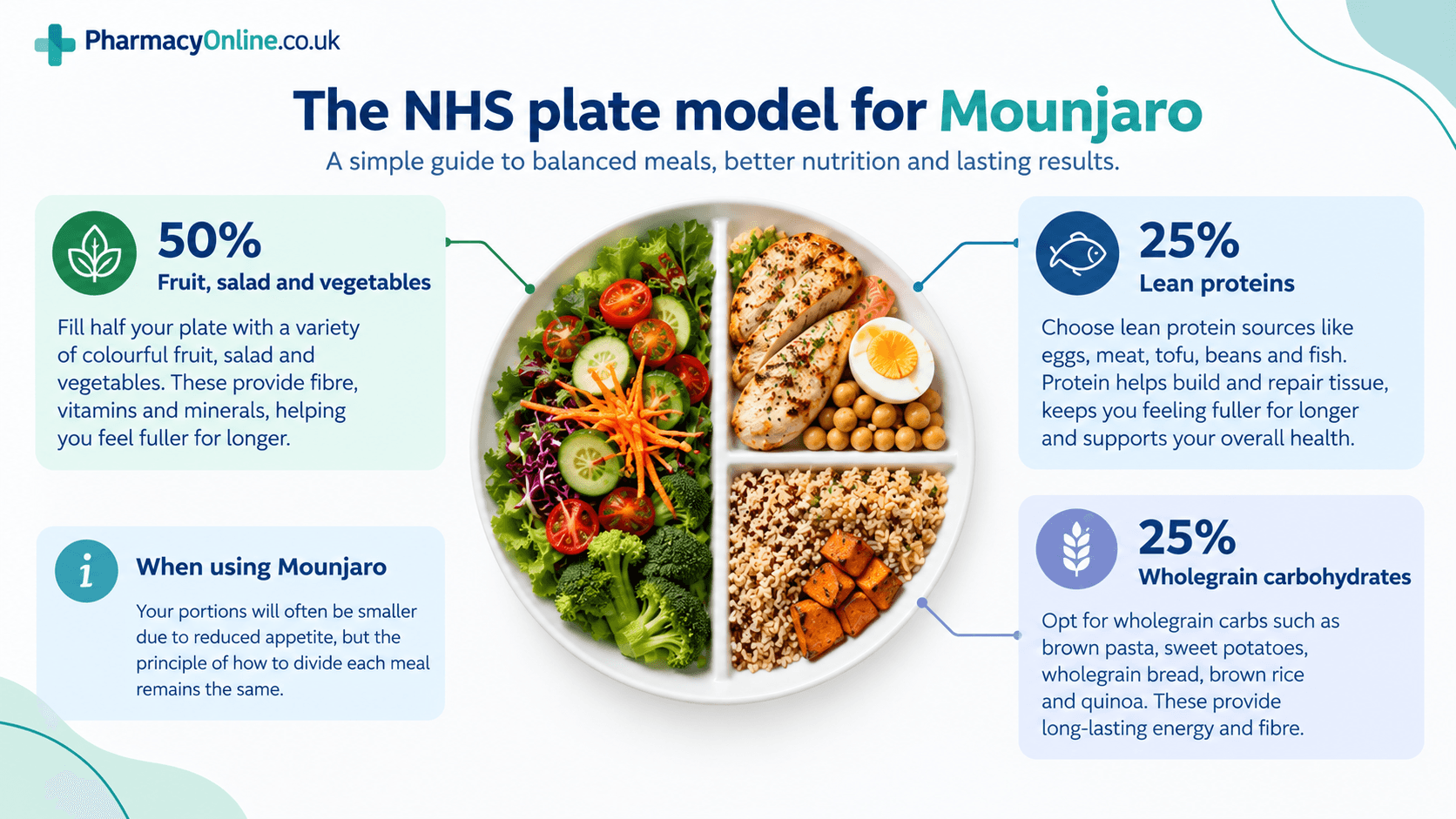
- 50% of your plate should include fruit, salad, and vegetables.
- Lean proteins like eggs, meat, tofu, beans, and fish should make up 25% of your plate.
- Wholegrain carbohydrates like brown pasta, sweet potatoes, wholegrain bread, brown rice and quinoa should make up 25%.
When using Mounjaro, your portions will often be smaller due to reduced appetite, but the principle of how to divide each meal remains the same.
What to avoid on Mounjaro
Weight loss progress comes from adopting a healthier lifestyle and balanced meals, not extreme dieting or restrictive eating. That said, you may want to moderate or limit certain food groups to maintain your recommended nutrient intake and reduce the risk of side effects.
High fat and fried foods
Mounjaro works by slowing gastric emptying, which means that certain foods will sit in your stomach for longer. Fatty foods such as processed meats, deep-fried foods, full-fat dairy and sauces, and Chinese/Indian takeaways are more likely to cause digestive discomfort, nausea, and even vomiting[1].
That doesn't mean you need to eliminate them, but it's a good idea to limit how often you eat them and keep portions small.
Sugary drinks and refined carbohydrates
Refined carbohydrates such as white pasta, rice, and bread can cause blood sugar spikes and crashes. The same applies to sugary foods like cakes and sweets, and high-sugar drinks (energy drinks, non-diet sodas, and fruit juices)[5].
Because these foods offer minimal nutritional value, swapping them for whole grains supports healthy eating.
Fizzy drinks
Carbonated drinks - even those with no sugar - can cause complications such as bloating and nausea. Because Mounjaro is already known to increase the risks of these side effects, you may notice more severe symptoms when using the medication.
Limiting your fizzy drink intake when you first start treatment and on each injection day can reduce these side effects.
Acidic and spicy foods
Some people are more sensitive to acidic and spicy foods than others. For this reason, watch whether consuming chilli, curry, and citrus fruits worsens nausea, heartburn, and indigestion. If so, reducing your intake can make you more comfortable.
Ultra-processed foods
Processed snacks, ready meals, and even "diet" products are convenient, but their nutritional profile is often limited. Many are low in protein and essential nutrients, but high in additives and carbohydrates.
Because Mounjaro limits your appetite, consuming large amounts of processed foods can lead to deficiencies[10].
Caffeine in moderation
You don't need to cut out caffeine altogether, but moderating your intake to 1-2 cups of coffee or tea each day can be beneficial. Mounjaro can cause heartburn and increase your heart rate when taken at higher doses. Excessive caffeine may worsen these symptoms and cause jitters in some people[1].
If you notice that your symptoms worsen after consuming caffeine, switching to decaffeinated options can be beneficial.
What should I eat on Mounjaro injection day?
The MHRA doesn't have specific recommendations for foods to eat on injection day, but most patients find their GI symptoms are most pronounced then (especially in the first stages of treatment and during dose increases).
Choosing the right foods, including lighter meal options and foods that are easy to digest, can reduce discomfort.
Suitable injection day foods:
- Poached, scrambled or boiled eggs
- Porridge or plain oats
- Lean protein (fish, chicken or tofu) with plain rice
- Greek yoghurt and berries
- Vegetable soups and clear broths
- Oatcakes and plain crackers
- Low-fibre fruits like bananas
- Wholegrain toast with smashed avocado or nut butters
Recommended foods to avoid:
- Greasy and fried foods
- Heavy meals with large portions
- Spicy foods
- Pastries
- Rich sauces
- Carbonated drinks
- Creamy curries
- Alcohol (see the next section for more information)
Frequent meals with smaller portions
Many people using Mounjaro find they experience fewer side effects when they eat smaller meals more frequently. For example, instead of consuming two large meals a day, three meals plus a healthy snack can reduce GI symptoms.
Drinking alcohol while using Mounjaro
The MHRA SmPC doesn't list alcohol as a contraindication, but moderation is key here[1]. Combining Mounjaro with alcohol can increase your risks of the following:
- Heightened Sensitivity: Mounjaro may impact how your body processes alcohol, due to delayed gastric emptying. There are reports of patients noting that they're more sensitive to the effects of alcohol when using the weight loss medication.
- Nutritional Value: Alcohol has a low nutritional value because it's high in calories and sugar. Drinking high amounts can be counterproductive when you're trying to lose weight.
- Side Effects: Individuals who experience Mounjaro side effects like acid reflux, nausea, and heartburn on Mounjaro may notice that alcohol increases their symptoms.
- Blood Sugar Control: Alcohol can impact blood glucose levels in users with type 2 diabetes, making it harder to control them.
NHS guidance
You don't need to abstain from alcohol completely, but the NHS recommends that adults don't exceed 14 units weekly. Spread this across at least three days, with several days of no drinking in between[6].
Many patients find they naturally drink less on injection days and after dose increases because the effects occur sooner.
Drinking alcohol with food and reducing your intake (e.g. drinking half pints instead of pints) is advisable.
Protecting against nutritional deficiencies
According to a 2026 review, almost 500,000 adults using GLP-1 medicines were at risk of protein, calcium, iron, and Vitamin D deficiencies[10].
Certain deficiencies, such as Vitamin D, are already a problem in the UK, but reduced food intake can put Mounjaro users at higher risk[7].
All adults in the UK should take a 10 mcg (400 IU) daily Vitamin D supplement from October to March, but Mounjaro users may benefit from a year-round supplement[7].
Important nutrients to prioritise:
- Iron: Red meat, tofu, beans, lentils, pumpkin seeds, spinach, and fortified foods. Combining iron with Vitamin C can enhance absorption[8].
- Calcium: Fortified plant milks, dairy, tinned salmon and sardines, and tofu (set with calcium)[2].
- Vitamin D: Plant milks, fortified dairy products, eggs, and oily fish - plus a daily Vitamin D supplement[7].
- B12: Fish, meat, dairy, and eggs. Vitamin B12 supplements are recommended for plant-based diets[9].
- Zinc: Shellfish, nuts, meat, legumes, and pumpkin seeds[2].
If you notice any symptoms, you can ask your GP for a blood test. They'll look for deficiencies and recommend the next steps.
Eating out and social occasions on Mounjaro
You can still eat out on Mounjaro, but following these tips can prevent nausea:
- Choose a starter as a main or share a larger dish.
- Select steamed, grilled or baked foods over creamy and fried options.
- Ask for sauces on the side.
- Start with small buffet portions.
- Eat the food slowly and stop when you begin to feel full.
If you're ordering a takeaway, lighter options can prevent gastric upset. For example, instead of ordering a creamy curry, choose grilled Tandoori.
Most people will understand that you're moderating your calorie intake without much explanation.
Sample 7-day Mounjaro meal plan
Everyone is different, and your diet plan depends on your weight loss goals, dietary choices, and other factors. The following plan is illustrative only, but it can give you an idea of the type of foods to eat.
For tailored advice, please speak to your healthcare professional, a dietician, or your Mounjaro prescriber.
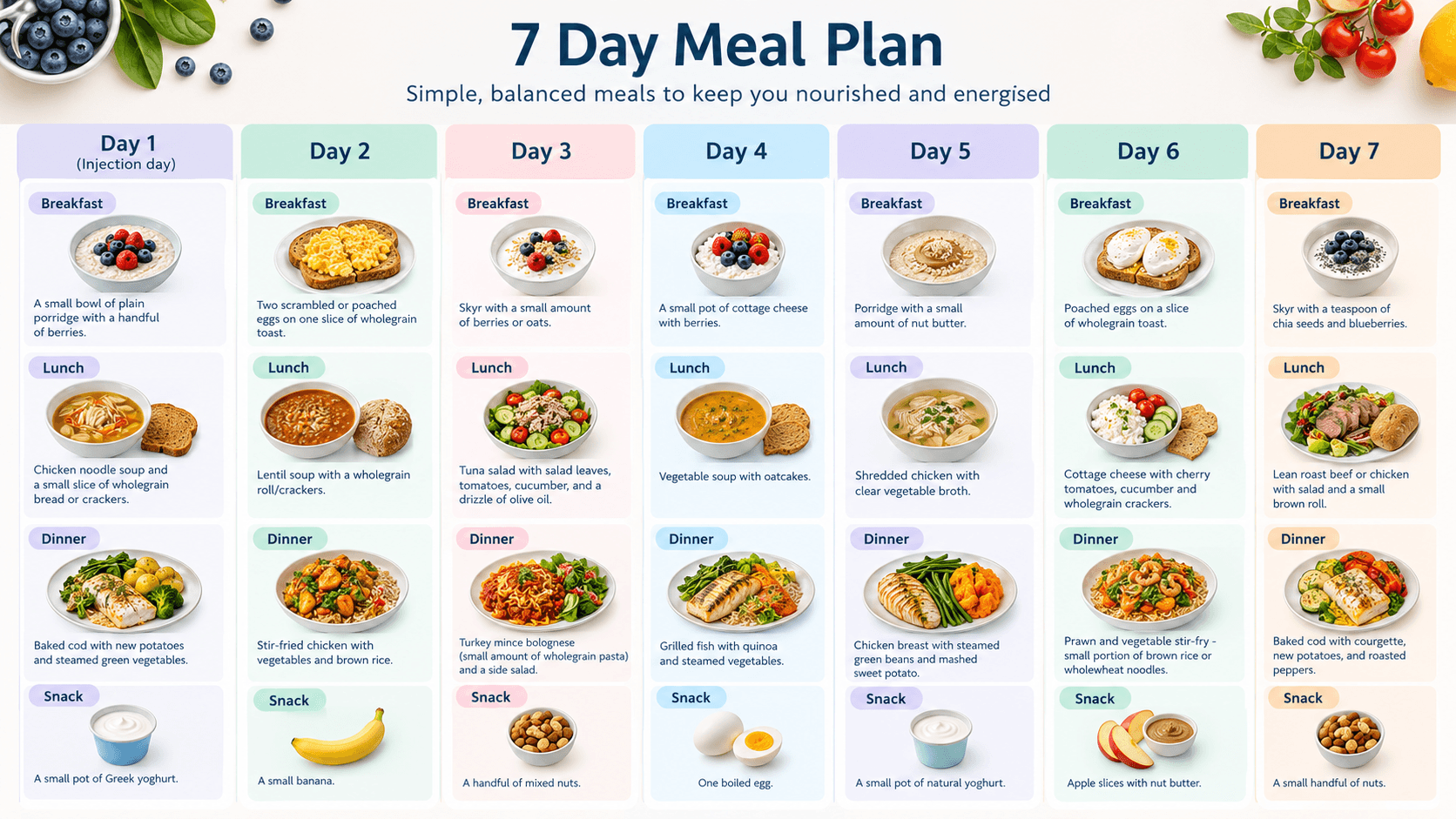
Day 1 (Injection day)
- Breakfast: A small bowl of plain porridge with a handful of berries.
- Lunch: Chicken noodle soup and a small slice of wholegrain bread or crackers.
- Dinner: Baked cod with new potatoes and steamed green vegetables.
- Snack: A small pot of Greek yoghurt.
Day 2
- Breakfast: Two scrambled or poached eggs on one slice of wholegrain toast.
- Lunch: Lentil soup with a wholegrain roll/crackers.
- Dinner: Stir-fried chicken with vegetables and brown rice.
- Snack: A small banana.
Day 3
- Breakfast: Skyr with a small amount of berries or oats.
- Lunch: Tuna salad with salad leaves, tomatoes, cucumber, and a drizzle of olive oil.
- Dinner: Turkey mince bolognese (small amount of wholegrain pasta) and a side salad.
- Snack: A handful of mixed nuts
Day 4
- Breakfast: A small pot of cottage cheese with berries.
- Lunch: Vegetable soup with oatcakes.
- Dinner: Grilled fish with quinoa and steamed vegetables.
- Snack: One boiled egg
Day 5
- Breakfast: Porridge with a small amount of nut butter.
- Lunch: Shredded chicken with clear vegetable broth.
- Dinner: Chicken breast with steamed green beans and mashed sweet potato.
- Snack: Small pot of natural yoghurt
Day 6
- Breakfast: Poached eggs on a slice of wholegrain toast
- Lunch: Cottage cheese with cherry tomatoes, cucumber and wholegrain crackers.
- Dinner: Prawn and vegetable stir-fry - small portion of brown rice or wholewheat noodles.
- Snack: Apple slices with nut butter.
Day 7
- Breakfast: Skyr with a teaspoon of chia seeds and blueberries.
- Lunch: Lean roast beef or chicken with salad and a small brown roll.
- Dinner: Baked cod with courgette, new potatoes, and roasted peppers.
- Snack: A small handful of nuts.
Frequently Asked Questions
Is there a specific Mounjaro diet?
What should I eat on Mounjaro injection day?
Mounjaro injection days can increase your side effects, including digestive discomfort, nausea, and acid reflux[1]. Eating lighter meals and avoiding very fatty or spicy foods can reduce digestive symptoms.
Can you drink alcohol on Mounjaro?
What foods make Mounjaro side effects worse?
It can vary between people, but foods that are high in refined sugars, unhealthy fats, and greasy and spicy foods can cause heartburn, nausea, and diarrhoea.
Consuming large meals can lead to bloating and nausea as Mounjaro slows stomach emptying[1].
How much protein should I eat on Mounjaro?
Can I drink coffee on Mounjaro?
You can drink coffee, but moderating your intake to up to 2 cups a day can prevent side effects. Mounjaro can increase heart rate[1], so if you notice a faster heartbeat, feel jittery, or experience side effects, you can switch to decaffeinated coffee.
Do I need to take vitamins on Mounjaro?
Most people in the UK should take Vitamin D supplements during the autumn and winter[7], but whether you choose to take supplements really depends on your diet and if you have a deficiency. Eating less on GLP-1 medicines can increase the risk of low intakes of nutrients such as protein, calcium, iron and vitamin D[10].
What if I'm not hungry enough to eat on Mounjaro?
Mounjaro works by decreasing your appetite, which contributes to weight loss[1]. But adequate nutrition is still essential[10].
Consuming smaller meals more often and focusing on nutrient-dense foods can help[2][4]. If you're unable to drink or eat, or struggle to keep food down, please get in touch with your healthcare provider.
References
- [1]
Eli Lilly. Mounjaro (tirzepatide) Summary of Product Characteristics. Mechanism of delayed gastric emptying and reduced appetite (section 5.1); gastrointestinal effects including nausea, vomiting and diarrhoea, and increased heart rate at higher doses (section 4.8). electronic medicines compendium (emc). https://www.medicines.org.uk/emc/product/15484/smpc [Accessed 11 September 2026]
- [2]
NHS. The Eatwell Guide. Balanced diet and food groups, higher-fibre wholegrain starchy foods, fruit and vegetables, dairy and calcium sources, and fluid advice of 6 to 8 glasses a day. NHS. https://www.nhs.uk/live-well/eat-well/food-guidelines-and-food-labels/the-eatwell-guide/ [Accessed 11 September 2026]
- [3]
British Nutrition Foundation. Protein. UK reference nutrient intake of 0.75 g of protein per kg of body weight per day for adults (around 56 g/day for men and 45 g/day for women), with higher needs noted for some groups. British Nutrition Foundation. https://www.nutrition.org.uk/nutritional-information/protein/ [Accessed 11 September 2026]
- [4]
Leidy HJ, Clifton PM, Astrup A, et al. The role of protein in weight loss and maintenance. Higher protein intake supports satiety and helps preserve lean muscle mass during energy restriction. Am J Clin Nutr 2015;101(6):1320S-1329S. doi:10.3945/ajcn.114.084038. https://ajcn.nutrition.org/article/S0002-9165(23)27427-4/fulltext [Accessed 11 September 2026]
- [5]
Diabetes UK. Carbohydrates and diabetes. Higher-fibre wholegrain carbohydrates have a lower glycaemic index and affect blood glucose more slowly than refined carbohydrates such as white bread and white rice. Diabetes UK. https://www.diabetes.org.uk/living-with-diabetes/eating/carbohydrates-and-diabetes [Accessed 11 September 2026]
- [6]
NHS. Alcohol units. Adults are advised not to regularly drink more than 14 units a week, spread over three or more days, with drink-free days. NHS. https://www.nhs.uk/live-well/alcohol-advice/calculating-alcohol-units/ [Accessed 11 September 2026]
- [7]
NHS. Vitamin D. Everyone is advised to consider a daily 10 microgram supplement in autumn and winter (October to March), when the body cannot make enough vitamin D from sunlight. NHS. https://www.nhs.uk/conditions/vitamins-and-minerals/vitamin-d/ [Accessed 11 September 2026]
- [8]
NHS. Iron. Good dietary sources of iron, and the advice that vitamin C may help the body absorb iron. NHS. https://www.nhs.uk/conditions/vitamins-and-minerals/iron/ [Accessed 11 September 2026]
- [9]
NHS. The vegan diet / Vitamin B12. People following plant-based diets are advised to obtain vitamin B12 from fortified foods or a supplement. NHS. https://www.nhs.uk/live-well/eat-well/how-to-eat-a-balanced-diet/the-vegan-diet/ [Accessed 11 September 2026]
- [10]
Urbina SL, et al. Micronutrient and nutritional deficiencies associated with GLP-1 receptor agonist therapy: a narrative review. Risk of inadequate protein, calcium, iron and vitamin D intake with GLP-1 receptor agonist use. Clin Obes 2026. doi:10.1111/cob.70070. https://onlinelibrary.wiley.com/doi/10.1111/cob.70070 [Accessed 11 September 2026]


Related articles

Mounjaro Doses: The Complete Mounjaro Dosage Chart and Titration Guide
Mounjaro is a once-weekly weight loss injection that comes in six different dose strengths. Each Mounjaro dose is administered with the KwikPen, and you begin with the lowest dose, gradually increasing it weekly until you reach your optimal maintenance dose (titration).

Is Mounjaro Safe? UK Safety Guide 2026
Mounjaro is safe for most adults, as long as it's prescribed by a professional and used under medical supervision. However, there are some serious side effects.

What to Expect From Our Online Weight Loss Service
Thinking about using our online weight loss service? Find out what happens at each stage, from first consultation through to ongoing check-ins and support.